
Introduction
Anyone looking to buy marble slabs will quickly realize that there is a wide selection—and that the differences are significant. A poor choice often only becomes apparent in everyday use: stains, scratches, or unsuitable surfaces.
In this article, you'll find clear buying advice to help you avoid common mistakes and find the right marble slab for your project.
What are marble slabs, and what are they used for?
Marble is a natural stone that has been used in construction and design for centuries. Its greatest advantage is that every slab is unique, with its own distinct grain pattern.
Typical applications include:
- Kitchen countertops
- Bathroom
- Window sills
- Tables and Furniture
- Patios (properly constructed)
Marble creates a high-quality, almost luxurious look, especially in interior spaces. At the same time, however, it is more delicate than many alternatives—a factor you should definitely keep in mind when making a purchase.
Buying Marble Slabs: These Factors Are Key
Buying isn't just about looks. Three factors determine whether you'll be satisfied in the long run.
1. The Right Application
The application has the greatest influence on the choice of panel.
- Kitchen: heavy exposure to liquids and acids
- Bathroom: Moisture and ease of care are important
- Outdoor areas: Frost resistance and slip resistance are crucial
Mistakes here almost always lead to problems in everyday life.
2. The Right Surface
The surface affects both the appearance and the suitability for everyday use. The more the item is used, the more important it is to have a durable surface.
- Polished: shiny, elegant, but more delicate
- Polished: matte, modern look, durable
- Brushed: natural texture, ideal for heavy use
3. Quality and Origin
Not all marble is the same—the differences are most evident in density, finish, and durability.
Pay special attention to:
- uniform texture
- clean workmanship
- Origin (e.g., Carrara = very popular)
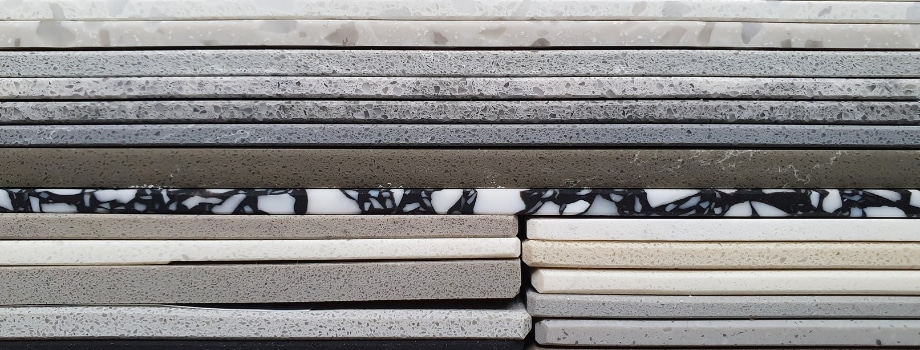
Pro tip: Always check a sample—pictures aren't enough.
How much do marble slabs cost?
Prices for marble slabs vary widely and depend on quality, origin, and finish. In practice, marble slabs typically range from around 50 to over 200 euros per square meter. The exact price depends heavily on quality and finish.
What many people forget is that the cost of materials is only part of the total cost. Cutting, transportation, and installation can significantly increase the price.
Especially when it comes to custom solutions—such as kitchen countertops—you should always factor in a total budget, not just the price per square meter.
Typical price ranges:
- approx. €50–100/sq. m. → basic quality
- approx. €100–200/m² → standard range
- Starting at €200/sq. m. → Premium marble
In addition, there are often costs associated with:
- Cut
- Transport
- Assembly
Important: Always plan for the entire project, not just the cost of materials.
Common Mistakes When Buying Marble Slabs
A common mistake is to focus solely on the price. This often results in a countertop that’s inexpensive but quickly causes problems in everyday use.
It is equally important not to underestimate the maintenance required. Marble needs regular care and should be sealed to ensure it stays beautiful for a long time.
Many buyers also rely solely on photos. In reality, colors and grain patterns often look different. If you don’t take a close look, you’re in for some unpleasant surprises later on.
Conclusion: Making the Right Choice When Buying Marble Slabs
If you're thinking of buying marble slabs, don't base your decision solely on appearance or price. The intended use, the surface finish, and the quality will determine how satisfied you are in the long run.
With the right choice, you'll get a material that not only looks high-quality but also stands the test of time.
👉Tip: Get some advice and compare actual samples—that makes all the difference.
Yes, but they are sensitive to acids (e.g., lemon juice). Sealing them is important.
Yes, if they are frost-resistant and have been treated accordingly.
Yes, for example, granite or quartz composite—more durable, but less customizable.